Friday, December 4, 2015

The Dusky Gopher Frog by Chad Collins

Description and Ecology of the Gopher Frog

The dusky gopher frog is a small frog with a stubby appearance endemic to the longleaf pine ecosystem of the United States, especially in Alabama, Mississippi, and Louisiana.  The dark patterns on the frog’s back act as a sort of fingerprint, i.e. each frog has a different assortment of color and size of spots.  Adult gopher frogs spend the majority of their time underground in holes created by the gopher tortoise, a similarly endangered species.  While the typical breeding season for this species is December through March, reproduction has been observed in all months except May, June, and July when heavy rains occur.  There is a large range in the number of eggs one breeding pair can produce in one bout, anywhere from 500 to 7,000 eggs and can take 9 to 21 days to hatch.

Geographic and Population Changes

Very few individuals have ever been observed in Alabama and there are no known breeding sites in the state.  In the early 2000s, researchers tried to find a group of ponds that would be suitable to rebuild populations of the dusky gopher frog, but each pond they found would not be an ideal habitat for the frog.  Woody vegetation grew throughout the ponds and would not allow for the frogs to effectively lay their eggs. 

The last observation of the gopher frog in Louisiana occurred in 1965.  Recently, however, researchers have found a group of 5 ponds that would be suitable for translocation of the species in order to help build up populations.  These ponds have been listed as critical habitat for the species’ eventual recovery.

In the early 20th century, the gopher frog was reportedly common in coastal counties of Mississippi.  Since then, however, researchers have found the majority of suitable habitats for the frogs have been converted into agriculture, pine plantations, and urban areas.


Listing under ESA and Threats to the Species

In 2001, the dusky gopher frog was listed by the U.S. Fish and Wildlife Service under the Endangered Species Act as an endangered species.  Current and historical threats to the species include habit destruction and degradation, predation, and human curtailment of naturally occurring fires.

The range of the frog has been significantly lessened by habitat fragmentation due to urbanization.

Predation was likely a contributing factor in the decline of earlier populations of the species, especially by fish and invasive fire ants.

The longleaf pine ecosystem is able to thrive via regular natural fires that have been eliminated by recent human intervention, thereby lowering the quality of the frogs’ habitat.


Recovery Plan

The current recovery plan is to continue to monitor and improve existing populations and their habitat, along with creating new populations through translocation and reintroduction.  Currently, it is impossible to give an accurate estimate for the timeline of the recovery of this very endangered species.

What Can You Do?

If you would like to get involved in the conservation efforts for the dusky gopher frog or other frog species, you can visit savethefrogs.com and inform yourself and your friends about the issues currently facing frog populations throughout the U.S.  

Sources


The San Joaquin Kit Fox
Written by Kinser Coelho

Description and Ecology

Do you know what the largest subspecies of small, North American foxes in California is? If you guessed the San Joaquin Kit Fox, you are absolutely right! It was named this after some genetic work was done by the authors of Mercure et al. (1993) claiming that of the multiple subspecies of the kit fox in the western United States, the San Joaquin Valley population was the most distinct, earning them the title of becoming their own distinct subspecies of kit foxes. These tiny and secretive animals are about the size of a house cat, with an average body length of of 30.98 inches and a tail of 11.4 inches in length. They have long slender legs and are about a foot high at the shoulder weighing roughly 5 lbs. They have relatively large ears that are close together, a narrow nose, and a long, bushy tail with a black tip as shown above. They're tan colored during the warmer months of the year and their coat changes to a silver-gray during the winter months, all while maintaining a relatively white and yellowish underside year round. Their foot pads are small in comparison to other kit foxes with an average length of 1.2 inches and an average width of 1 inch. Their longer ears are the best way to tell them apart from their close, neighboring relatives in that their ears are three quarters of an inch longer than the gray foxes.

San Joaquin Kit Foxes feast on the typical prey of a carnivore their size in the wild on grasslands: rodents and other small animals in their geographic range such as black-tailed hares, desert cottontails, mice, kangaroo rats, squirrels, birds and lizards. They themselves are preyed on by carnivores larger than them, mainly red foxes because of their size difference ad also coyotes. The best time to try and spot one is near sunset or even at night because they are primarily nocturnal. Some may venture out of their dens with their young but this typically will only happen as the sun is setting and they definitely will not be venturing too far away from their dens. Their mating season begins in December and ends in March in which they produce litters of between 2 and 6 pups. The parents and litter live in underground dens which are necessary to keep them cool in the summer and warm in the winter. These dens also keep them safe from coyotes, red foxes, and shelter their pups as they mature. San Joaquin Kit Foxes use dens built by other animals or structures such as large drainage pipes they find in fields or even near cities. Just one fox may use between three and 24 different dens each year. The parent San Joaquin Kit Foxes care for their pups until the pups are able to find food for themselves and venture away from their den which typically happens between 4-5 months of age. Studies have also shown that some juvenile female pups or male pups may stick with their parents for almost a year, helping to clean the den and sometimes help foster a new litter. This is not a typical occurrence but it can happen!

Geographic and Population Changes

As talked about above, San Joaquin Kit Foxes were found throughout most of the San Joaquin Valley in California but this was, in a way, speaking with a past tense. Debates about the exact historical range population have been going on for years but the authors of Grinnell et al. (1937) believed that by 1930, the San Joaquin Kit Fox range had been reduced by more than half. This is because this was around the time that people began to convert the home grasslands of the kit foxes into farms, orchards, and cities. Today, there are fewer than 7,000 San Joaquin Kit Foxes remaining in the once heavily populated San Joaquin Valley. It's scary to think about the impact humans have had on the homeland of the foxes in such a short amount of time due to agriculture, population growth, and urbanization.
Listing Date, Cause of Listing, and Main Threats 

The San Joaquin Kit Fox was listed as endangered by the U.S. Department of the Interior in 1967 and by the state of California in 1971. It still remains endangered today both federally and in California. The loss and degradation of habitat by agricultural and industrial developments has and continues to drop the carrying capacity of the San Joaquin Kit Fox's habitat. Urbanization and cattle grazing has also played a role. Reduced rainfall and increase changes of drought due to climate change are a factor as well in San Joaquin Kit Fox populations. The more rain, the more kit foxes so when there's no a lot of rain, you're not going to see the same amount of kit foxes. Red foxes and coyotes assist in decreasing the population of San Joaquin Kit Foxes being that they are the target prey a majority of the time  but that's far less of a toll than what human interaction and climate change does to the San Joaquin Kit Foxes. Another threat humans put on the foxes population size is using poisons to reduce rat and mice populations. Not only are the poisons deadly to the foxes if eaten but they can be easily transmitted through the fox's prey that had previously taken in the poison.
Recovery Plan

According to the Recovery Plan for Upland Species of the San Joaquin Valley, California put out by the U.S. Fish and Wildlife Service,the goal of the recovery plan is to work towards the establishment of a viable complex of San Joaquin Kit Fox populations on private and public lands throughout their geographic range in California. Conserving a number of populations, some much more significant than others because of their large sizes or strategic locations, will be a necessary foundation for recovery of the San Joaquin Kit Fox. The areas these populations inhabit need to include as much of the environmental variability of the past, historical range as possible. This will ensure that maximum genetic diversity will be conserved in the kit fox metapopulation to respond to varying environmental conditions. Also, connections need to be established, maintained, and promoted between the populations to stop the negative consequences of inbreeding between the foxes, random catastrophic events like the drought California is still going through right now, and demographic factors. The three core populations that need to first be established back to what they were in the past due to their decreasing size are the Carrizo Plain natural area in San Luis Obispo County, the natural lands of western Kern County inhabited by the San Joaquin Kit Fox, and the Ciervo-Panoche natural area of western Fresno and eastern San Benito Counties. These three populations are more or less connected by grazing lands although they are steep and dense in some areas. This is a key factor because this provides linkages to the three core populations once they themselves start expanding. It  may take some time but once these populations begin to grow, we will be seeing the populations of the San Joaquin Kit Fox increase at a much quicker pace which will lead to the spread of the foxes over their previous natural habitats in the San Joaquin Valley. This result will be better than the decrease of the kit foxes we are currently seeing year after year. 


Personal Action?

After reading this blog about the endangered San Joaquin Kit Fox, you may be asking yourself how you can help to save them? For one, you could go to this link http://www.defenders.org/san-joaquin-kit-fox/basic-facts and donate money to the good folks of Defenders of Wildlife who have already begun to help the San Joaquin Kit Fox by partnering up with the California Cattlemen's association to form the California Rangeland Conservation Coalition. They already have more than 50 members working to save 13 million acres of rangeland in the Central Valley through easements and restoration projects in which more than a million acres of that falls within essential San Joaquin Kit Fox habitat. You could also follow the link to http://ecos.fws.gov/ipac/ from the U.S. Fish and Wildlife's website to assist you in determining how your activities may impact sensitive natural resources for the San Joaquin Kit Fox and obtain suggestions for ways you can address these impacts yourself. These may seem like two small contributions but giving a little is giving a lot when it comes to the recovery of the once abundant population of the San Joaquin Kit Fox.  


References:

http://ecos.fws.gov/docs/recovery_plan/980930a.pdf

http://ecos.fws.gov/ipac/

http://www.fws.gov/sacramento/es/Recovery-Planning/Home/es_recovery.htm

http://www.defenders.org/san-joaquin-kit-fox/basic-facts

http://esrp.csustan.edu/speciesprofiles/profile.php?sp=vuma

http://www.asktheexterminator.com/wild_animals/Fox_Facts_printer.shtml

http://ecos.fws.gov/tess_public/profile/speciesProfile?spcode=A006#conservationPlans


Thursday, December 3, 2015

Bull Trout

The Bull Trout

Written By Noah Chiero
The bull trout, known as the Salvwlinus Confluentus, is part of the salmon family although looking very similar to a rainbow trout. The bull trout is a member of the salmon family and is known as char. They are located farther north than most groups of freshwater fish and survive very well in cold water. While lake trout are also species of the char, bull trout are able to exhibit difference body characteristics then lake trout and have different life history and behavior. Bull trout can be distinguished from trout and salmon by not having teeth on the roof of their mouth, having light colored spots on a dark background and the lack of sports of the dorsal fin. They also tend to have smaller scales then salmon and trout. At one point in time, bull trout’s and the Dolly Varden we considered the same species till Taxonomic work identified the bull trout and Dolly Varden different species. The bull trout’s diet is consists of mostly other fish. After spawning, young bull trout spend their time eating small aquatic vertebrae which consist of larvae. As the bull trout grows older, Time is spend hunting bigger species. Often bull trout will feed on sculpin, darters or other trout. Their
behavior also becomes more piscivorous as they grow older.

Geographic and Population Changes: The Bull Trout is mainly found in cold, clear waters in the high mountains and rivers of northwestern America. They can be found in Montana, Oregon, Idaho and Washington. A large population of bull trout’s exists east of the Continental Divide in Alberta due to having a perfect climate where they are able to sustain themselves. Bull trout have high demands for their Eco-system. They generally only live in water below 55F. They habitat includes clean gravel
beds, deep pools in the river and complex cover such as snags and cut banks. Some individual bull trout’s have been seen migrating from one coastal river to another by ocean which is truly amazing. Over the years, the bull trout has seen dramatic population changes in streams and rivers due to a variety of factors. One of the main reason the bull trout is considered threatened is competition from other exotic fish. Habitat destruction is also another main cause for the decline of the bull trout. The poorly designed logging road construction has caused water temperatures to elevate, loss of spawning gravel and loss of structure making it hard for the bull trout to reproduce. The dewatering of drain ditches during irrigation season also makes movement to and from spawning grounds difficult. 

Listing and Type of Listing: As of November 1999, the US Fish and Wildlife Service listed all bull trout within the United States as a Threatened Species on the Endangered Species Act of 1973. In 1999, a new listing was applied to bull trout in the Coastal- Puget Sound population group and all populations east of the continental divide in Montana. 

Cause of Listing and Main Threats to Continued Existence: The bull trout was listed as endangered on the Endangered Species Act due to habitat fragmentation and interaction with non-native species. Most habitat fragmentation is due to logging roads damaging spawning habitat. At the time of the listing, climate change was not taken into account but that has changed. Climate change studies and assessments have been done since then focusing of the effect climate is having on bull trout. Most biologists are worried about raising water temps making water unsuitable for bull trout to live in.  With raising global temps expected in coming years, the future for the bull trout does not look so bright. 

Description of Recovery Plan: The recovery plan for bull trout has a few main goals that are in place to stop declining species. The main goal of the recovery plan is to effectively manage and ameliorate primary threats. Since exotic fish are a main cause of declining populations, removable of this predictor number one. While it is important to take away exotic species, spreading awareness and working cooperatively with partners to implement the recovery plan is just as important. Raising awareness in other communities is vital to make sure these actions take place. In simple terms, the main goal of the recovery plan is to protect, restore, and maintain a suitable habitat that the bull trout is able to spawn in and grow in population. With current recovery actions taking place, Fish and Wildlife estimate 70 years for full recovery of the species in all recovery units.

Personal Action: The best action and person can talk to help the recovery of the bull trout is raising
awareness among their community. The more people hear about this issue, the more they will be willing to help. Other actions you can take is to have minimal contact with them especially when fishing. Catch and release of the bull trout is mandatory when fishing for other trout species which otherwise could result in a 200 fine. With the recovery plan in action and raising awareness among our communities, the bull trout has a good chance for full recovery. 


Reference

1. U.S. Fish & Wildlife Service - Recovery Plan for the California Red-legged Frog

2. Bull Trout Facts: http://wwwhttp://www.atlanticpanic.com/species/view/bull-trout/.fws.gov/pacific/news/1997/btfacts.htm

3. More on Bull Trout: http://www.fws.gov/pacific/news/1997/btfacts.htm

4. http://unaccomplishedangler.com/2015/07/not-targeting-bull-trout-in-idaho/

5. https://www.flickr.com/photos/usfwsmtnprairie/sets/72157625590787796/

6. http://www.nativetroutflyfishing.com/bulltrout.htm

Polar Bears- Michael Chourappa Bio 112


POLAR BEAR 
(Ursus maritimus)

          Quick Facts                        

Lifespan:
20-25 years   
Weight:
Males: 550 - 1,320 lbs, Females 200-700 lbs
Height: 
Males 8 - 9 feet
Females 6 - 7 feet
Population:
20,000-25,000 polar bears
Mating Season:
Late March-May 
Gestation:
About 8 months
Litter size:
1 - 4 cubs, 1 or 2 common
                                                       
Ecology

Polar bears are marine mammals that can be found in the thin ice sheets of the Arctic Circle. These bears have adapted to the marine life of the Arctic by having a thick coat of insulated white fur along with their slightly webbed strong front paws that provide them buoyancy and warmth in the cold icy waters. Don't be fooled by their thick white fur because polar bears actually have black skin to absorb the warming sun rays that hit the Arctic. This white fur provides padding for their paws and also covers a layer of fat known as blubber that protects them from cold surfaces and ice. 

Habitat
These mammals are only found in the Arctic. They spend most of their time on the edges of ice where the currents and ice patches meet (best chances to find prey such as seals). Females usually build dens deep in the snow drifts when they give birth to cubs. Polar bears travel thousands of miles per year in order to find food. There are approximately 19 subpopulations of Polar bears in the Arctic region.      

Diet
Polar bears eat ringed seals and bearded seals. However they can also munch on walruses, carcasses of whales and even birds' eggs. They are known to travel great distances in search of food.

Behavior
These white giants are dependent on the stable ice patches where they usually hunt, find mates and building shelter. These animals are strong swimmers and usually float due to their buoyant body shapes in the Arctic. They are also solitary when they reach adulthood and only interact with other polar bears to mate and raise cubs. Bear cubs only stay with their mothers for a couple years. Mother polar bears produce about 5 litters in their lifetime. Also, Polars do not hibernate in the winter unlike other bears.


Population Decline and Listing

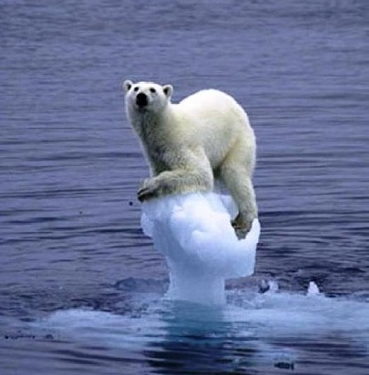
Polar Bears are a vulnerable species and are unfortunately facing endangerment due to sea ice losses due to climate change being one of the leading threats to their existence. In 2014, the IUCN Polar Bear Specialist Group conducted research only to find that out of the 19 subpopulations of Polar Bears, 3 are declining, 1 is increasing, 9 have insufficient data and only 6 are stable.

Declining                   
  • Baffin Bay
  • Kane Basin
  • S.Beaufort Sea
Stable
  • Davis Strait
  • Foxe Basin
  • Gulf of Boothia
  • N. Beaufort Sea
  • S. Hudson Bay
  • W.Hudson Bay

Increasing
  • M'Clintock Channel

Data deficient
  • Arctic Basin
  • Barents Sea
  • Chukchi Sea
  • East Greenland
  • Kara Sea
  • Lancaster Sound
  • Laptev Sea
  • Norwegian Bay
  • Viscount Melville Sound

Polar Bears were listed under the Endangered Species Act by the U.S. Fish and Wildlife Service on May 15, 2008. It also qualified as a "depleted species" under the Marine Mammal Protection Act of 1972. 

Threats
The leading threat to polar bears today is the loss of habitat caused due to climate change and greenhouse gas emission. However in  the 1960s and 70s, polar bears faced the threat of unregulated commercial and sport hunting. This was taken care of by the 1973 Agreement on the Conservation of Polar Bears signed by the U.S, Canada, Russia Denmark and Norway. The bears are also going through a loss of prey due to the climactic change of the Arctic waters. Other threats to this species include pollution, disease and sometimes the lack of potential mates. 

Management Plans
  • Support International conservation efforts
  • Manage human-bear conflicts
  • Manage Subsistence harvest
  • Protect habitats and shelters (dens)
  • Minimize risks of pollution and contamination
  • Conduct strategic monitoring and further research


7 summarized steps of Recovery
  1. Develop and implement an effective communication strategy to inform U.S. and other leading nations the need to reduce greenhouse gas emissions and other anthropogenic causes of Arctic Warming
  2. Continue the USFWS plan to be carbon neutral by 2020 and engage in climate change mitigation
  3. Work closely with Range States to implement conservation actions outlined in the Circumpolar Action Plan for polar bears
  4. Develop and implement human-polar bear interaction and safety plans for the U.S. 
  5. Continue den detection, habitat work and mapping in the United States
  6. Model population-level effects from infection levels
  7. Update existing oil spill models that overlap with seasonal polar bear movements
Personal Actions
  • I will try my best to promote the recovery of such a majestic species on social media and other networks
  • I will also keep in mind my personal ecological footprint and spread the word of reducing our anthropogenic effects in the Arctic waters. 
Sources:

Recovery Plan
http://ecos.fws.gov/docs/recovery_plan/Polar%20Bear%20Conservation%20Mgmt%20Plan.pdf

Geography 
http://animals.nationalgeographic.com/animals/mammals/polar-bear/

Behavior, Population and Threats
http://www.polarbearsinternational.org/about-polar-bears/status-and-threats

Basic Facts
http://www.defenders.org/polar-bear/basic-facts

Images
http://www.polarbearsinternational.org/sites/default/files/legacy/Polar_Frontier_18th-08-10_127.jpg

http://d1by67ljd45m4v.cloudfront.net/media/9A5E7548-BD90-82C2-FA9EB8900FD274B3.jpg

Map
http://www.polarbearsinternational.org/media/images/polar-bear-subpopulation-map


The Columbia Basin Pygmy Rabbit
Written by Justin Canterberry

The Columbia Basin Pygmy Rabbit is most notable for being the smallest native rabbit to North America; typically weighing less than a pound and measuring less than a foot in length. They are found amidst the Columbia Basin ecosystem, specifically in habitats with large amounts of sagebrush, which is their staple for both food and shelter. Also, they have the unique ability to burrow, which they then use for shelter, safety, thermal cover, and reproductive activities. Columbia Basin Pygmy Rabbits play an important role in arid sagebrush ecosystems: benefiting the structure of plant communities, enabling greater nutrient cycling, and being a prey item for many predators. 

Geographic and Population Changes

For the last 100,000 years, these rabbits have had a presence in the Columbia Basin ecosystem, which is considered as northern Oregon through central Washington. Neighboring states such as Montana, Idaho, Wyoming, Utah, Nevada, and California all boast populations of pygmy rabbits. However, isolation for many thousands of years has made these pygmy rabbits all genetically distinct sub populations. During the beginning of the 20th century, it was observed for these rabbits to have populations in the six Washington counties of Douglas, Grant, Lincoln, Adams, Franklin, and Benton. By 1993, their populations had diminished to approximately 150 pygmy rabbits, which in 2001, then decreased to less than 30 rabbits in all of Washington.

Threats and Endangerment

A couple years later, in 2003, the Columbia Basin Pygmy Rabbit was fully listed as endangered under the Endangered Species Act. There were many factors that contributed to the rabbit’s decline, but it is thought the greatest factor to be agricultural development overtime, which destroyed and fragmented the pygmy rabbit’s natural habitat. As with most species, once their population decreased below a particular number, they became more at risk to influences that normally would not be as tasking, such as chance environmental events, predation, and disease. At the time of listing, the main threats to Columbia Basin Pygmy Rabbits were small population size, loss of genetic diversity, inbreeding, and lack of suitable habitat. 

The Journey to Recovery

The goal of the Recovery Plan is to help reestablish the number, distribution, and safety of the Columbia Basin Pygmy Rabbit, enabling it to have self sustaining populations that will be able to endure any foreseeable threats in the future. It has been and will be quite the road to reach that goal, but there has been huge amounts of effort and large steps in that direction. Besides protecting and maintaining suitable habit, a crucial part in the recovery of these rabbits has been a captive breeding program to help boost population sizes and genetic diversity. To counteract low genetic diversity and interbreeding amongst the rabbits, the Washington Department of Fish and Wildlife designed a intercross breeding strategy, which, with much trouble and time, cross bred the Columbia Basin pygmy with a population of pygmy rabbits from Idaho. Unfortunately, in 2007, when 20 of these crossbred rabbits were reintroduced back into their native habitat, they experienced an extremely high mortality rate, and within a year, they had completely died off. Taking into account everything learned through that trial, scientists were able to adapt their managing strategy and take greater measures in sustaining the pygmy rabbits upon release. One key measure taken was to release the rabbits in protected semi-wild enclosures, which would help adjustment and boost numbers of rabbits to then release into the wild. Since 2011, there have been over 1300 kits that have been birthed, which has then led to the release of over 1200 rabbits to the wild in Sagebrush Flat Wildlife Area in Douglas County. 

The Fight is Not Over Yet!

The recovery of Columbia Basin Pygmy Rabbits is still in the process, as populations are beginning to be reintroduced to new recovery areas and still are susceptible to many of the threats that initially led to their decline. There are many ways that we can step up and help aid the recovery of these rabbits, along with several other species that are facing extinction. One way to help would be to donate and support varying groups that protect and research animal species and habitats (Below are a couple links: check it out yourself to see what they’re all about). I believe the most important way to help is to be aware. There are thousands of species that are on the road to being completely wiped off the face of the earth, and an overwhelming majority of the factors are consequence of human action. We have thrown off the balance and harmony of nature, and it is our moral obligation to take strides to re-correct and recover what is being lost. 

Links: 


References:

-http://wdfw.wa.gov/conservation/pygmy_rabbit/

The Jaguar

The Jaguar

By Logan Chirigotis
Jaguar, © Warwick Lister Kaye iStockphoto
http://www.defenders.org/jaguar/basic-facts

The Jaguar is the largest cat in the Americas, it had solid black dots throughout its body that are the shape of roses and therefore most scientists call the spots "rosettes" and its coat is usually yellow or tan. The Jaguar is around 5-6 feet in length and weighs 100-250. The weight depends on whether it is a male or female and if its habitat is open like a grassland or a forest. The Jaguar is a carnivore and its prey for hunting includes deer, crocodiles, frogs, fish and even monkeys. The Jaguar surprisingly love the water and use it to bath as well hunt for fish. The Jaguars reproduce year round with having around 1-4 cubs in each litter and stay with their cubs for about two years. It's lifespan ranges from 10-15 years. The Jaguars are also very famous for the their involvement in stories. 

Geographic Range and Population
The Jaguars are now located mainly in South America from Mexico to Argentina. The Jaguar use to reside in the southern United States but now it has been completely eradicated from the United States and now only reside in South America. The Jaguar has two kinds or habitats that it lives in, a open habitat like grasslands or a forest habitat. The population of the Jaguar is now only 15,000. 
http://www.sonic.net/~evolve/wp/human_ecology/simons_land_fantasy.htm 

Listing
The Jaguar was listed on March 30, 1972 under the Endangered Species Conservation Act of 1969 but then listed under the Endangered Species Act in 1973 because it had already been listed prior to the 1973 act. The Jaguar is listed endangered wherever they are found within the world. Even though the Jaguar was listed in 1972, it was not until 2010 where the U.S. Fish and Wildlife Service decided to draft a recovery plan but in April 2012 the plan was finished. 

The Threats to Jaguars
Their are three main threats that made the Jaguar endangered, habitat loss, poaching, and human intolerance. The habitat for the Jaguar is getting destroying through humans building streets, towns, and so on. Poaching is also a big problem because many hunters will hunt the Jaguar for recreational purposes,which means that to hunters the Jaguar is considered a trophy. Now the third one is human intolerance which is similar to poaching but the reason why the Jaguars are hunted is not because they are trophies but because the Jaguars are killing the livestock of farmers. 

Recovery Plan
The recovery plan for Jaguars consists of the protecting and restoring the Jaguar's habitat so it will be able to sustain a Jaguar population. It also includes reducing human caused Jaguar deaths as well as reduce the illegal hunting of the Jaguar prey. Reducing the hunting of the Jaguar prey helps it maintain high fitness and overall keep the Jaguar population healthy. Another objective in the plan is to revise the plan if new information on the Jaguar is found out through continued research of it. 
Jaguar Cub at Bratislava Zoo by Emmanuel Keller 4
http://www.zooborns.typepad.com/zooborns/jaguar/page/2/


Work Cited
  • A. Recovery Outline a for the Jaguar (n.d.): n. pag. Environmental Conservation Online System. Apr. 2012. Web. 2 Dec. 2015.
  • "BASIC FACTS ABOUT JAGUARS." Defenders of Wildlife. N.p., n.d. Web. 2 Dec. 2015.
  • "Jaguars, Jaguar Pictures, Jaguar Facts - National Geographic." National Geographic. N.p., n.d. Web. 03 Dec. 2015.
  • "Seagrasses: Biology, Ecology and Conservation." (2006): n. pag. Kids Planet. Web. 3 Dec. 2015
  • "Threats to Jaguars." Defenders of Wildlife. N.p., n.d. Web. 3 Dec. 2015.

Tuesday, December 1, 2015

Columbia Basin Pygmy Rabbit

Written by Lena Choi


These pygmy rabbits are the smallest rabbits in North America, ranging from 9.25 to 11.65 inches and weighing less than a pound. These rabbits live up to 3 to 5 years, but often their life is cut short due to predation. They have the ability to hop up to 15 miles per hour and are the only rabbits in the United States known to dig their own burrows. Active year-round, they are able to endure temperatures below zero to more than 100 degrees fahrenheit. Unlike other rabbits, these pygmy rabbits have a shorter breeding season, producing around three litters of up to six kits each year.


Habitat

These pygmy rabbits live in a tall, dense sagebrush habitat. They depend on sagebrush for food and shelter; 99 percent of their diet consists of the leaves from the sagebrush during the winter. During the European settlement era, the sagebrush was abundant, but that has declined more than 30 percent because farmers, developers, and ranchers planted non-native plants, such as cheatgrass, which has completely overrun the sagebrush. The pygmy rabbits historically range in portions of California, Oregon, Nevada, Idaho, Montana, Wyoming, Utah, and Washington.


Listing

The Columbia Basin pygmy rabbit was listed an endangered species in the state of Washington under the ESA in 2003. Along with the habitat loss from agricultural developments and wildfires, predation, demographic limitation, and diseases/decrease in genetic diversity contributed to the decline of the Columbia Basin pygmy rabbits. Common predators of these pygmy rabbits are weasels, coyotes, raptors, badgers, ravens, owls, foxes, and bobcats.


The pygmy rabbit is listed endangered only in state of Washington because of the demographic limitation, and thus leading to disease and lack of genetic diversity. The pygmy rabbits in Washington are geographically isolated from the other populations of the pygmy rabbits . This causes problems of inbreeding, such as weakened immune systems and bone deformities, leading to diseases.

Recovery Plan

To decrease the amount of inbreeding, the recovery plan consists of bringing pygmy rabbits from outside of Washington and reintroducing them into the Columbia Basin population. As for resolving the habitat loss and destruction, the plan states to survey areas that have the highest potential to be inhabited by the pygmy rabbits and contacting landowners and managers with lands of high priority to pursue conservation agreements. For more details on the recovery plan, please check out http://ecos.fws.gov/docs/recovery_plan/Columbia%20Basin%20Pygmy%20Rabbit%20Final%20RP.pdf


Personal Action

The easiest way to help out is to spread the word and raise awareness about these pygmy rabbits. Another way to get involved is to become informed about any construction of roads or buildings that may be detrimental to the habitat of these rabbits, and to use your voice to prevent the destruction of these rabbits’ habitat.


Sources

http://media.spokesman.com/photos/2015/06/10/Pygmy_rabbit_6-15_252_t1140.JPG?abf36d44fcda22a1f7041162086f31df6a374511
http://www.oregonzoo.org/sites/default/files/gallery/images/H_orig_columbia_basin_pygmy_rabbit_nature_gal.jpg
https://www.youtube.com/watch?v=sRW8iZXMwMA
http://www.fws.gov/nevada/nv_species/pygmy_rabbit.html
http://ecos.fws.gov/docs/recovery_plan/Columbia%20Basin%20Pygmy%20Rabbit%20Final%20RP.pdf
http://www.nwf.org/News-and-Magazines/National-Wildlife/Animals/Archives/2013/Return-of-the-Mighty-Pygmy-Rabbit.aspx
http://wdfw.wa.gov/conservation/pygmy_rabbit/